Design & planning
Product definition, scope and interface design, delivered as a fixed-fee engagement.
Written response within one week. No preliminary sales call.
Typical engagement
- Typical duration
- 2–6 weeks
- Team
- 1–2 people
- Starts with
- Fixed fee, credited against a build
Indicative, not a quotation.
Engagement termsOverview.
This stage determines whether the build is worth undertaking. It is charged as professional work, deliberately: work given away to secure a contract is rarely done with care.
Engineers take part in these sessions. Nothing is designed without an assessment of how it will be built, which is what keeps the resulting estimates reliable.
What the work covers.
The capabilities design & planning engagements draw on. Scope is agreed per engagement, against the requirement.
Idea to plan
A structured sequence of idea, requirements, feature list and versioned roadmap, each a document the next stage builds on.
App-flow mapping
A screen inventory and flow diagrams showing how every screen connects.
Reusable flow patterns
Proven patterns for sign-in, onboarding, list and detail, search and filter, checkout and multi-step forms.
Design systems and tokens
A token set and design-system document that the build consumes directly.
High-fidelity mockups
AI-assisted high-fidelity mockups of the core flow, reviewed and refined by designers.
Competitive audits
Feature and flow audits of competing products before design begins, with the product then designed independently.
Brand systems
Product identity directions with logo systems and presentation decks.
Store and site content
Store-listing content written once and used as the source for both store and product site.
What you receive.
What changes hands during the engagement, and remains yours after it.
Handed over
- A scope document and versioned roadmap any competent team could build from
- An estimate as a range, with the assumptions that produce it
- An app-flow map and state inventory
- A design system with a token set
- High-fidelity mockups of the core flow
Technologies in use.
Evidenced in our own products and tooling for this service. Where your team already runs a stack, the work proceeds within it.
- Design
- Google Stitch
- JSON design tokens
- Diagrams and documents
- Mermaid
- Marp
- SVG
How it is delivered.
The sequence an engagement follows, from the first assessment onward.
Step 1: Interviews and audit
Stakeholder and user interviews, and an audit of competing products.
Step 2: Requirements
Requirements and a prioritised feature list.
Step 3: Flows and states
An app-flow map and state inventory, including empty and error states.
Step 4: Design
A design system and high-fidelity mockups of the core flow.
Step 5: Scope and estimate
A scope, a range estimate and a risk register, handed over as documents any team can build from.
Evidence in our own work.
Products we engineered and operate under our own name, and tooling we publish. Client engagements ship under our clients’ names and are not listed.
- Live
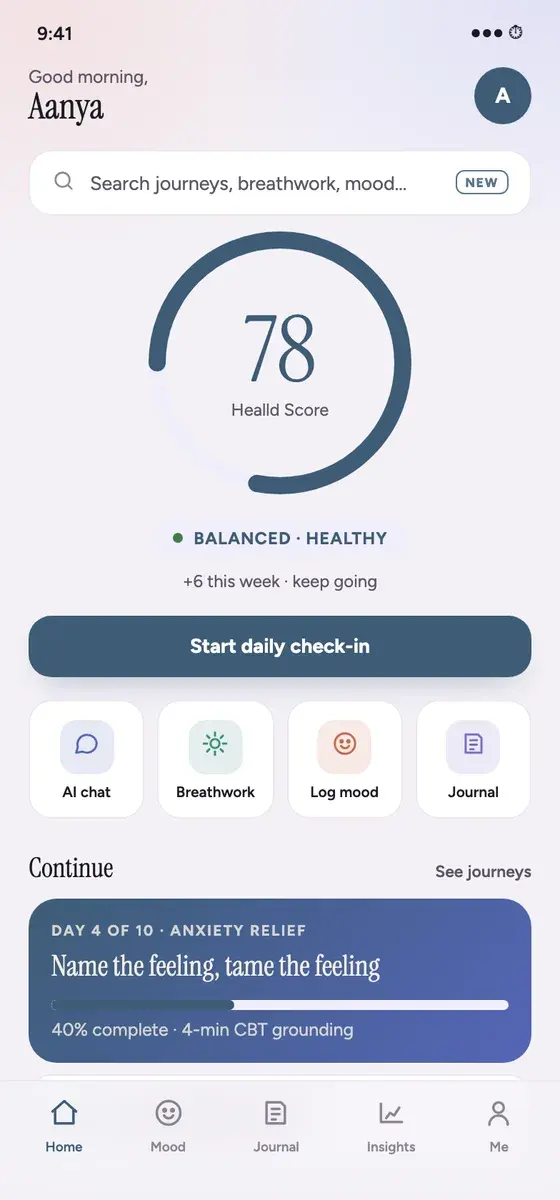
Healld
Mental wellness
A product defined around one legible score instead of ten separate charts.
- Android
- Live
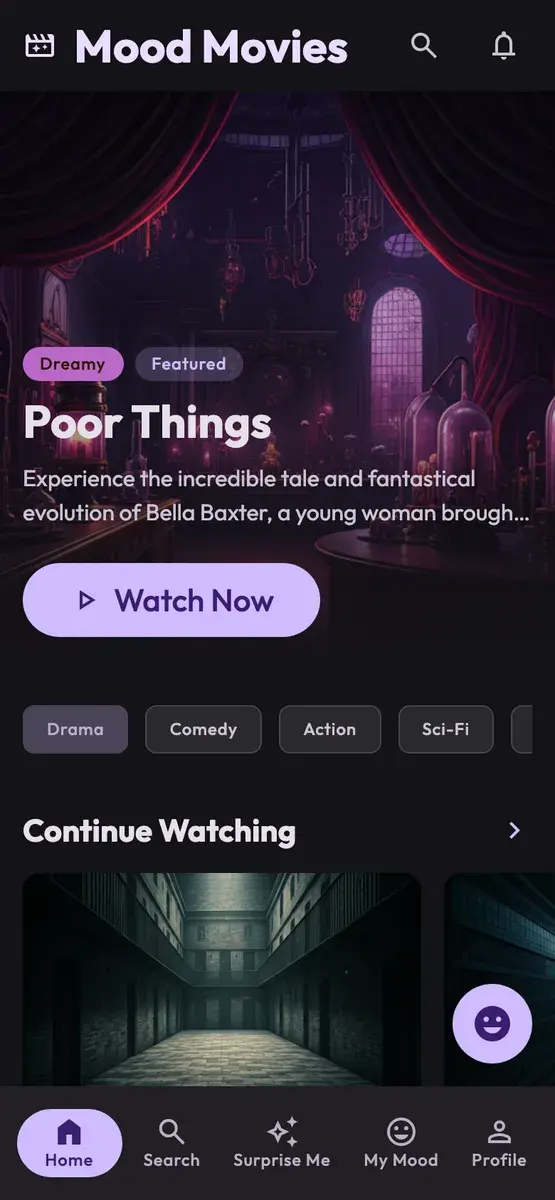
Mood Movies
Entertainment
A product defined around the visitor’s mood rather than a genre catalogue.
- Web


Where this is not the right fit.
This is not a branding engagement. It delivers a coherent product identity and a design system; a full corporate identity programme with brand strategy and campaign work is better served by a specialist agency.
Questions on design & planning.
Commercial, ownership and engagement questions are answered on the FAQ page.
All questionsCan we take the scope elsewhere?
Yes. The scope is written to be executed by any competent team; a scope that only its author can deliver is a lock-in device, not a deliverable.
Is the fee credited against a build?
In full, against a build engagement starting within 90 days. The term is written into the contract.
What format are the designs delivered in?
High-fidelity mockups and a token set, in formats your build team can use. The design tool is agreed at the start of the engagement.
Do you audit competitors?
Yes. Feature and flow audits come before design, and the product is then designed independently.
Do you do branding?
Product identity and design systems, yes. A full corporate identity programme is outside this engagement.
Other core services.
Mobile apps
Android and iOS apps, native or on a shared codebase where the product and the team justify one.
Games
Casual and children’s games, from playable prototype through store submission and live operations.
Web platforms
Dashboards, product sites and the data layers behind them, built to perform on a mid-range phone.
Desktop software
Windows, macOS and Linux applications for workflows that do not belong in a browser.
Applied AI
On-device speech and language models, and the evaluation work that decides whether a feature ships.
Something else?
Describe the requirement. Any other application or product is scoped against it.
Request a proposal.
Submit the requirement for design & planning work and receive a written assessment, including an indicative estimate and the risks identified at this stage.
Or write to hello@mobilebytesensei.com