Web platforms
Dashboards, product sites and the data layers behind them, built to perform on a mid-range phone.
Written response within one week. No preliminary sales call.
Typical engagement
- Typical duration
- 3–9 months
- Team
- 2–5 people
- Starts with
- Discovery sprint, then monthly
- Entry billing
- Fixed fee, 2–3 weeks
Indicative, not a quotation.
Engagement termsOverview.
Internal tools and customer platforms, together with the services beneath them. The acceptance standard is performance on a mid-range phone over a poor connection; a platform that does not meet it is not finished.
Most dashboard briefs describe a screen. Work starts from the decision the user is actually making, which usually produces a smaller product than the brief describes, and a better one.
What the work covers.
The capabilities web platforms engagements draw on. Scope is agreed per engagement, against the requirement.
Product sites with programmatic SEO
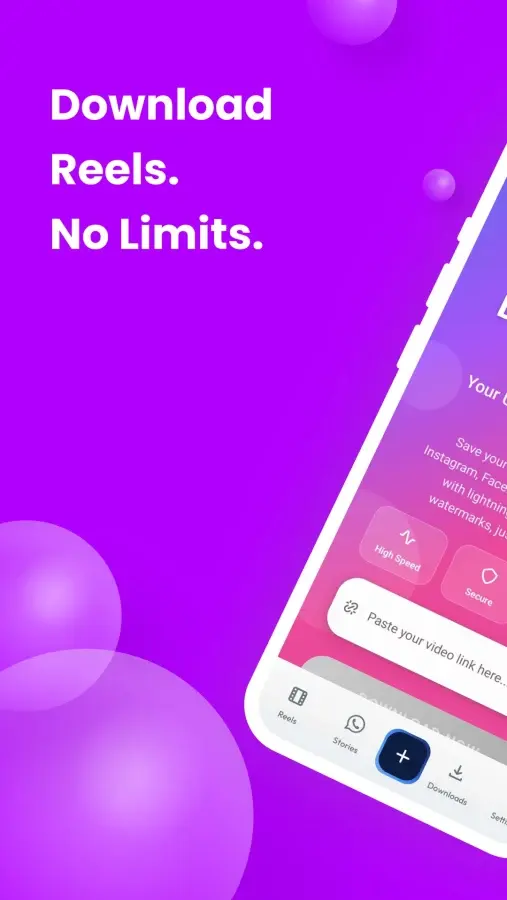
Statically generated sites with a page per use case, such as reelsdownloader.in and its per-platform pages.
Multi-brand site shells
One white-label codebase rendering a separate site for each product from a content bundle, deployed to many domains.
Next.js marketing and content sites
App Router sites with per-route JavaScript budgets and accessibility checks that fail the build.
SaaS dashboards
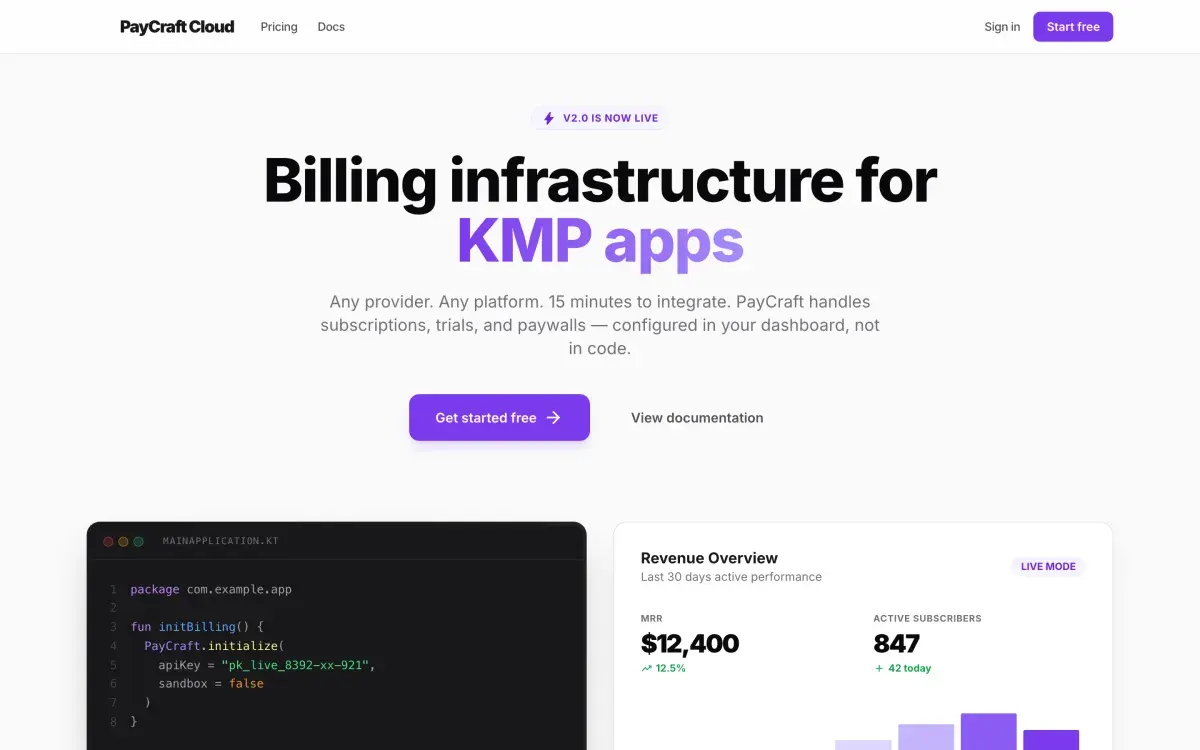
Products, pricing, analytics, team roles and audit logs, as in the PayCraft dashboard.
Data layer and authentication
Supabase Postgres, authentication, row-level security, edge functions and webhooks.
Web targets from shared Kotlin
Kotlin/Wasm and JavaScript targets that reuse domain code from a mobile app where that pays off.
Documentation sites
Developer documentation published with Docusaurus, MkDocs and GitHub Pages.
Legal and support pages
Privacy, terms, refund and support pages generated for each product.
What you receive.
What changes hands during the engagement, and remains yours after it.
Handed over
- Repository and CI/CD pipeline
- Deployment configuration for your hosting and domains
- Performance and accessibility reports from the CI gates
- Operational runbook and handover session
From the discovery sprint
2–3 weeks · Fixed fee
- A written scope stating what is in and what is explicitly out
- An estimate expressed as a range, with the assumptions behind it
- A written risk register
- A build plan in two-week increments
Technologies in use.
Evidenced in our own products and tooling for this service. Where your team already runs a stack, the work proceeds within it.
- Front end
- TypeScript
- React
- Next.js
- Astro
- Tailwind CSS
- Data and backend
- Supabase
- PostgreSQL
- Supabase Edge Functions
- Shared code
- Kotlin/Wasm
- Hosting
- Cloudflare Pages
- Netlify
- Vercel
- Quality and documentation
- Playwright
- axe-core
- Docusaurus
- MkDocs
How it is delivered.
The sequence an engagement follows, from the first assessment onward.
Step 1: Discovery
Start from the decision the user makes, not the screen list.
Step 2: Architecture
Choose the rendering model for each page type, static, server-rendered or application, and the data layer.
Step 3: Build with gates
Performance and accessibility checks run in CI from the first increment.
Step 4: Launch
Deploy to your hosting and domains.
Step 5: Hold
Monitoring, dependency upgrades and the content workflow.
Evidence in our own work.
Products we engineered and operate under our own name, and tooling we publish. Client engagements ship under our clients’ names and are not listed.
- Live
PayCraft
Developer infrastructure
A hosted dashboard for products, pricing, paywalls, providers and subscription analytics.
- Android
- iOS
- Web
- Desktop
- Live
ReelsDownloader
Utility
reelsdownloader.in: an Astro site with a working download tool and a page for each supported platform.
- Android
- Web
- Live
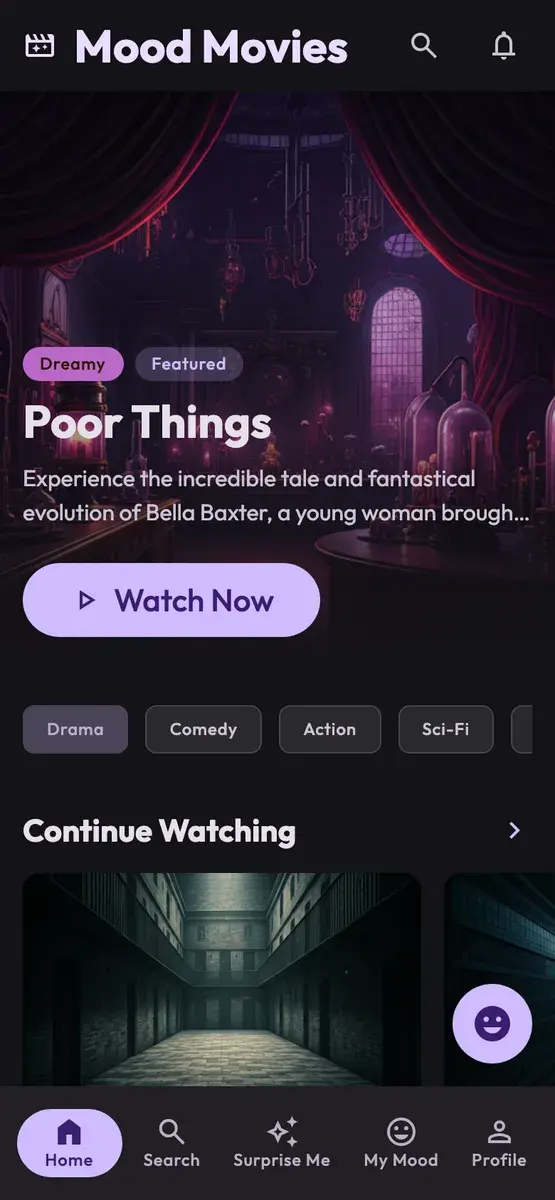
Mood Movies
Entertainment
A web product that chooses films by mood rather than genre, on a Supabase backend.
- Web


Where this is not the right fit.
This discipline is not suited to a brochure site commissioned on its own. An independent specialist will usually deliver it faster and at lower cost, and we will recommend that route rather than accept the work.
Questions on web platforms.
Commercial, ownership and engagement questions are answered on the FAQ page.
All questionsWhich cloud?
Yours. Where there is no existing preference, we recommend a provider and document the trade-offs; the account belongs to you in either case.
Do you provide design as well?
Yes, and on web engagements we recommend combining the two. The handover between a finished design and a separate build is where most quality is lost.
Static site or full application?
Chosen per page type. Our own sites generate content pages statically and use application surfaces only where they are needed.
Can one codebase serve several brands or domains?
Yes. MBS runs a white-label shell that renders each product’s site from its own content bundle.
Do you enforce performance?
Yes. JavaScript budgets and accessibility checks fail the build; this site runs both.
Can the web app share code with our mobile app?
Where it pays off, through Kotlin/Wasm or shared Kotlin domain logic.
Other core services.
Mobile apps
Android and iOS apps, native or on a shared codebase where the product and the team justify one.
Games
Casual and children’s games, from playable prototype through store submission and live operations.
Desktop software
Windows, macOS and Linux applications for workflows that do not belong in a browser.
Applied AI
On-device speech and language models, and the evaluation work that decides whether a feature ships.
Design & planning
Product definition, scope and interface design, delivered as a fixed-fee engagement.
Something else?
Describe the requirement. Any other application or product is scoped against it.
Request a proposal.
Submit the requirement for web platforms work and receive a written assessment, including an indicative estimate and the risks identified at this stage.
Or write to hello@mobilebytesensei.com