Design & planning
How an idea becomes a product: definition, flows, design systems and a plan we hold ourselves to.
We build our own products. We do not take client projects.
At a glance
- Our products
- Mood Movies, Healld
- Built with
- Google Stitch, JSON design tokens, Mermaid, Marp, SVG
- Steps
- Interviews and audit → Requirements → Flows and states → Design → Plan
Overview.
This is the stage that decides whether a product is worth building. We give it real time, because an idea that is never questioned is rarely built with care.
Engineers take part from the first session. Nothing is designed without knowing how it will be built, which is what keeps our own plans honest.
What we can build.
What our design & planning work covers, as used in the products on this page.
Idea to plan
A fixed sequence of idea, requirements, feature list and versioned roadmap, each a document the next stage builds on.
App-flow mapping
A screen inventory and flow diagrams showing how every screen connects.
Reusable flow patterns
Proven patterns for sign-in, onboarding, list and detail, search and filter, checkout and multi-step forms.
Design systems and tokens
A token set and design-system document that the build reads directly.
High-fidelity mockups
AI-assisted mockups of every screen state, reviewed and refined by people.
Competitive audits
Feature and flow audits of competing products before design begins; our product is then designed independently.
Brand systems
Product identities with logo systems, store listings and presentation decks.
Store and site content
Store-listing content written once and used for both the store and the product site.
Technologies in use.
Used in our own products and tooling in this discipline. Nothing is listed that a product of ours does not run on.
- Design
- Google Stitch
- JSON design tokens
- Diagrams and documents
- Mermaid
- Marp
- SVG
How we build it.
The sequence a product in this discipline follows, from the idea to the version people use.
Step 1: Interviews and audit
Talk to the people who have the problem, and study what already exists.
Step 2: Requirements
Requirements and a prioritised feature list.
Step 3: Flows and states
An app-flow map and state inventory, including empty and error states.
Step 4: Design
A design system and mockups of every state of the core flow.
Step 5: Plan
A versioned roadmap and the risks, before the first line of production code.
Our products in this discipline.
Products we built and run under our own name, and the libraries we publish from that work.
- In build
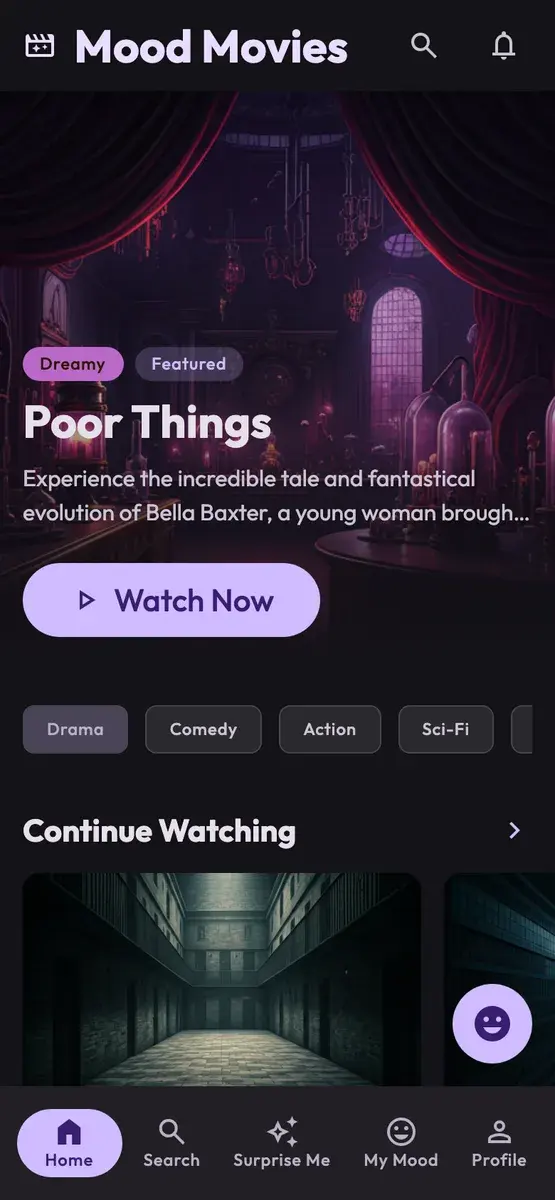
Mood Movies
Entertainment
A product defined around how you feel tonight rather than a genre catalogue.
- Android
- iOS
- Live
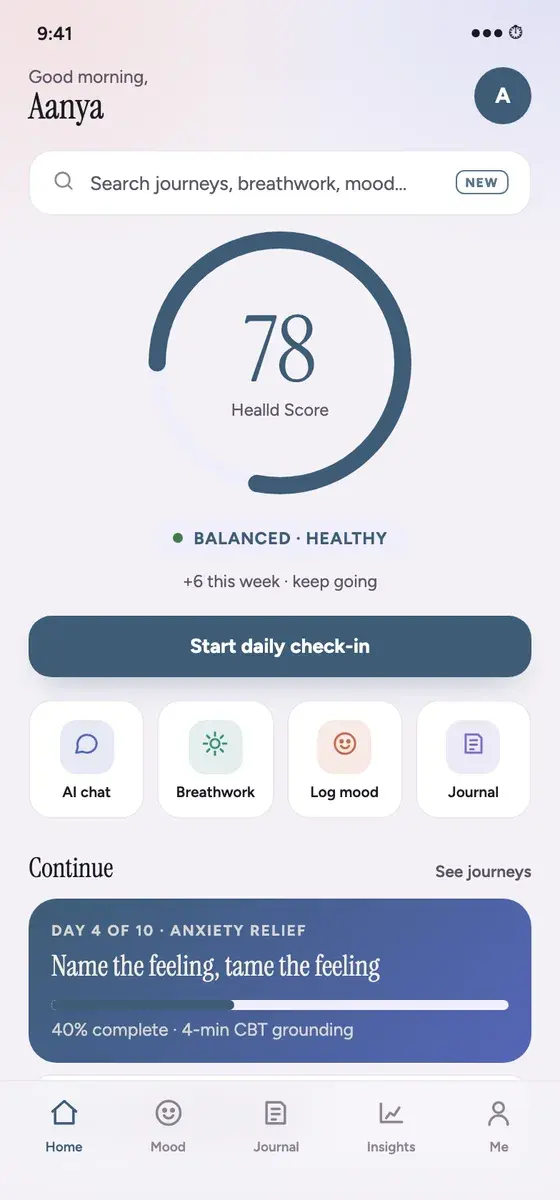
Healld
Mental wellness
A product defined around one legible score instead of ten separate charts.
- Android

What we decline to build.
We do not copy another product’s design. We study competitors to understand the problem, then design our own answer to it.
Questions on design & planning.
Questions about the company, payments and your data are answered on the FAQ page.
All questionsHow do you choose which ideas to build?
An idea is built when the problem is real, the first version is small enough to ship in weeks, and there is a way for it to pay for itself.
Do you use AI in design?
Yes, to produce mockups of every screen state quickly. People review and refine each one before it is built.
Do you audit competitors?
Yes. Feature and flow audits come before design, and the product is then designed independently.
Do you design your own brands?
Yes. Each product has its own identity, store listing and site, designed in-house.
Other disciplines.
Mobile apps
Our Android and iOS apps, native or on one shared codebase where the product justifies it.
Games
Our casual and children’s games, from playable prototype to store release and live events.
Web platforms
Our web apps, dashboards and product sites, built to perform on a mid-range phone.
Desktop software
Windows, macOS and Linux builds of our products, for work that does not belong in a browser.
Applied AI
AI in our products: video generation, on-device speech and language models, and the tests that decide what ships.
Questions about our design & planning?
Write to us about any of our products, a press or partnership enquiry, or working here. A person replies.