Applied AI
AI in our products: video generation, on-device speech and language models, and the tests that decide what ships.
We build our own products. We do not take client projects.
At a glance
- Our products
- ReelExport, Awaazly, Betterflo
- Built with
- whisper.cpp, llama.cpp, sherpa-onnx, LiteRT, Large language models
- Steps
- Feasibility → Model and runtime → Prototype on real hardware → Production → Run and improve
Overview.
We use AI where it does a job a person would otherwise do by hand: writing a script, voicing it, timing captions, transcribing speech. The model is never the product; the finished video or the clean note is.
An important part of this work is knowing when a model is the wrong tool. A rule that can be debugged is often better than a model that cannot be explained, and we choose on that basis.
What we can build.
What our applied ai work covers, as used in the products on this page.
AI video generation
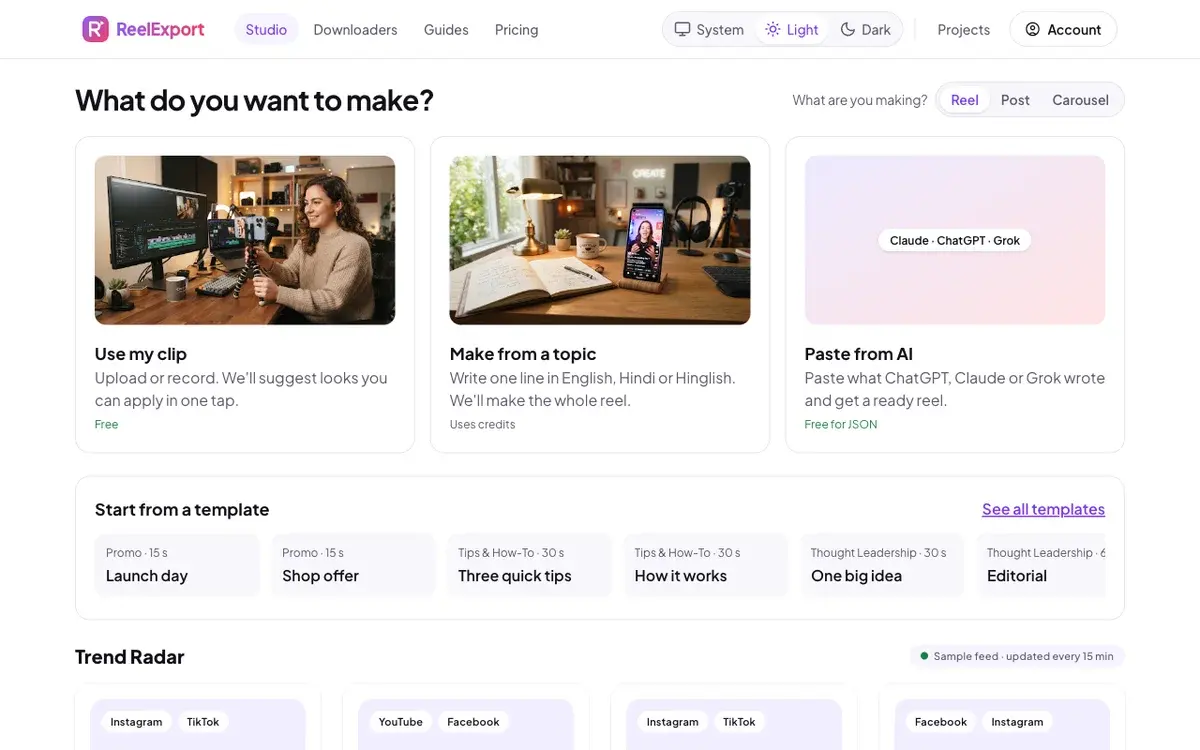
ReelExport turns a topic into a script, a voiceover, images and timed captions, then a finished reel, in English, Hindi and Hinglish.
Model routing
One router that picks a provider and model per task by cost, speed and quality, and falls back when one fails.
On-device speech recognition
Whisper-based transcription on Android and iOS, with models downloaded and managed in the app.
On-device language models
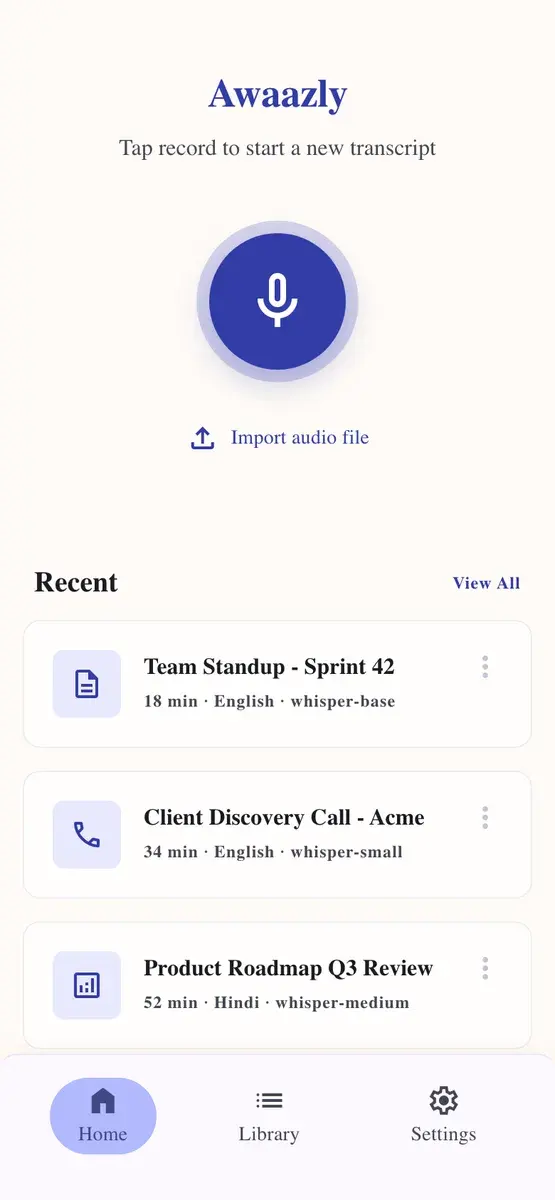
Summaries, action items and question answering from a local model, with no upload.
Models sized to the device
Speech and text models tiered to each phone’s memory and processor, with features reduced gracefully on smaller devices.
Voice input surfaces
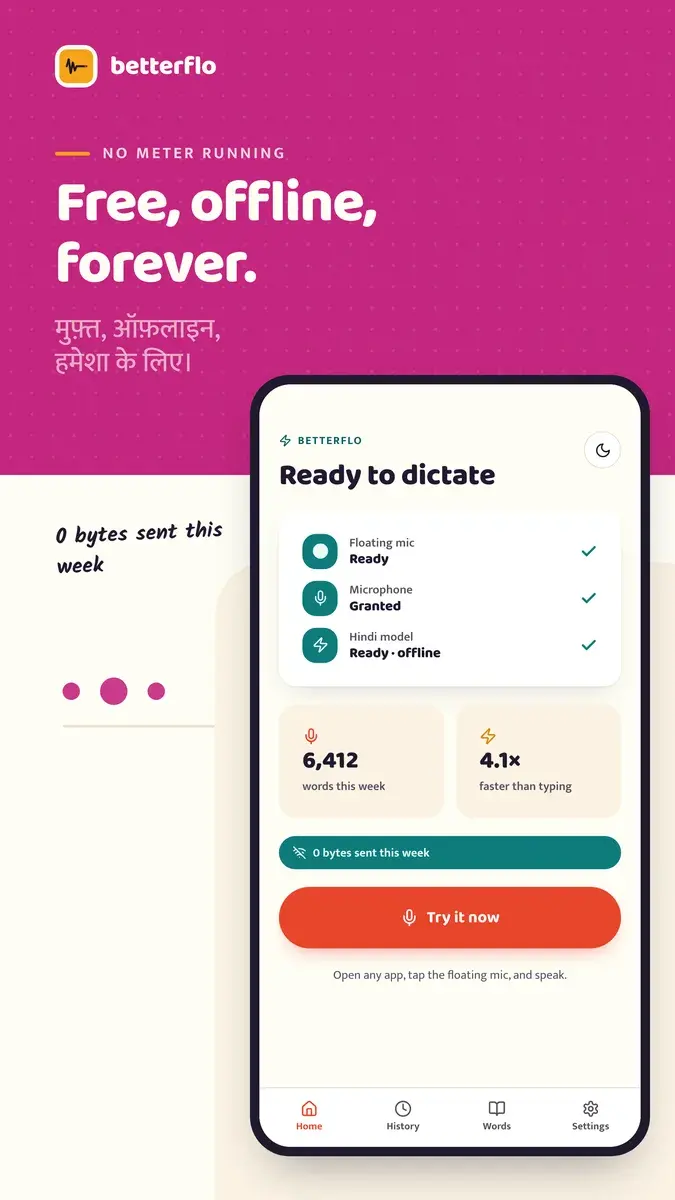
Dictation through a floating mic over any app or a dedicated keyboard.
Feasibility and evaluation
An evaluation set and named failure classes agreed before build, and model choice justified against them.
Technologies in use.
Used in our own products and tooling in this discipline. Nothing is listed that a product of ours does not run on.
- On-device inference
- whisper.cpp
- llama.cpp
- sherpa-onnx
- LiteRT
- Generation
- Large language models
- Text to speech
- Image generation
- Integration
- Kotlin Multiplatform
- Kotlin/Native C interop
- Cloudflare Workers
How we build it.
The sequence a product in this discipline follows, from the idea to the version people use.
Step 1: Feasibility
Decide whether a model is the right tool, and define the evaluation set and failure classes first.
Step 2: Model and runtime
On the device or on a server, sized to the latency, privacy and cost budget.
Step 3: Prototype on real hardware
Measure candidate models on the phones and connections our users have.
Step 4: Production
Ship with guardrails, a fallback, and credits refunded when a job fails.
Step 5: Run and improve
Model updates and quality checks against the same evaluation set.
Our products in this discipline.
Products we built and run under our own name, and the libraries we publish from that work.
- Live
ReelExport
AI video
An AI video studio: a topic becomes a script, voiceover, images and captions, in English, Hindi and Hinglish.
- Web
- AI
- Live
Awaazly
Voice
Whisper speech recognition and a local language model running on the phone, in twelve languages.
- Android
- AI
- Live
Betterflo
Voice
Dictation in eleven Indian languages, recognised on the phone with models tiered to the device.
- Android
- AI



What we decline to build.
We do not add a chat interface to a product that does not need one, and we do not let a model make a decision that materially affects a person without a human able to review it.
Questions on applied ai.
Questions about the company, payments and your data are answered on the FAQ page.
All questionsWhich of your products use AI?
ReelExport generates videos; Awaazly and Betterflo recognise speech on the phone; Awaazly also summarises with a local language model.
Do you train models from scratch?
Rarely. Choosing, routing and testing existing models is the right approach for almost everything we build.
How do you decide a feature is good enough to ship?
Against an evaluation set agreed before work begins, with the failure classes named in advance. Setting the bar after seeing the results is how weak features get shipped.
Can it run without sending data to a server?
Often, yes. Our speech recognition and language-model features in Awaazly and Betterflo run on the phone.
Which languages?
English, Hindi and Hinglish in ReelExport, and eleven or more Indian languages in our speech apps.
Other disciplines.
Mobile apps
Our Android and iOS apps, native or on one shared codebase where the product justifies it.
Games
Our casual and children’s games, from playable prototype to store release and live events.
Web platforms
Our web apps, dashboards and product sites, built to perform on a mid-range phone.
Desktop software
Windows, macOS and Linux builds of our products, for work that does not belong in a browser.
Design & planning
How an idea becomes a product: definition, flows, design systems and a plan we hold ourselves to.
Questions about our applied ai?
Write to us about any of our products, a press or partnership enquiry, or working here. A person replies.