Games
Our casual and children’s games, from playable prototype to store release and live events.
We build our own products. We do not take client projects.
At a glance
- Our products
- MBS Galaxy, Grid Duel, Color Sort, Tigu Run
- Built with
- Godot, Unity, Kotlin, Compose Multiplatform, Remote config
- Steps
- Prototype → Vertical slice → Production in increments → Store release → Live operations
Overview.
Games are where the performance budget is non-negotiable, and where setting it against real, inexpensive hardware pays back most clearly.
Each game goes from playable prototype to vertical slice to release. Remote configuration, events and analytics are built in from the start, not added after launch when retention falls short.
Our games live under MBS Galaxy, and every one has a version that plays in the browser.
What we can build.
What our games work covers, as used in the products on this page.
Casual and children’s games
Mobile games with simple controls, playable without accounts or sign-in where the audience calls for it.
Prototype to release
A playable prototype that tests the core loop, a vertical slice at release quality, then production in increments.
Solvable by design
Puzzle levels checked by a solver before they ship, so none needs a purchase or a guess to finish.
Remote configuration and live events
Tuning values and events changed after launch, without a new build.
Analytics instrumentation
Event tracking planned with the design, so retention questions can be answered from data.
Reward economies
Rewarded ads, soft currencies and unlocks that players earn by choice rather than buy to win.
Performance on low-end Android
Performance checked on an inexpensive reference phone from the vertical slice onward.
Technologies in use.
Used in our own products and tooling in this discipline. Nothing is listed that a product of ours does not run on.
- Engines and runtime
- Godot
- Unity
- Kotlin
- Compose Multiplatform
- Live operations
- Remote config
- Firebase Analytics
- Monetisation
- AdMob rewarded ads
How we build it.
The sequence a product in this discipline follows, from the idea to the version people use.
Step 1: Prototype
A playable build that tests whether the core loop is fun.
Step 2: Vertical slice
One level or loop at release quality, checked on a reference phone.
Step 3: Production in increments
Content and systems built in two-week increments, each playable.
Step 4: Store release
Age ratings, families-policy compliance, listings and review handling.
Step 5: Live operations
Remote configuration, daily puzzles, events and analytics after launch.
Our products in this discipline.
Products we built and run under our own name, and the libraries we publish from that work.
- Live
MBS Galaxy
Games
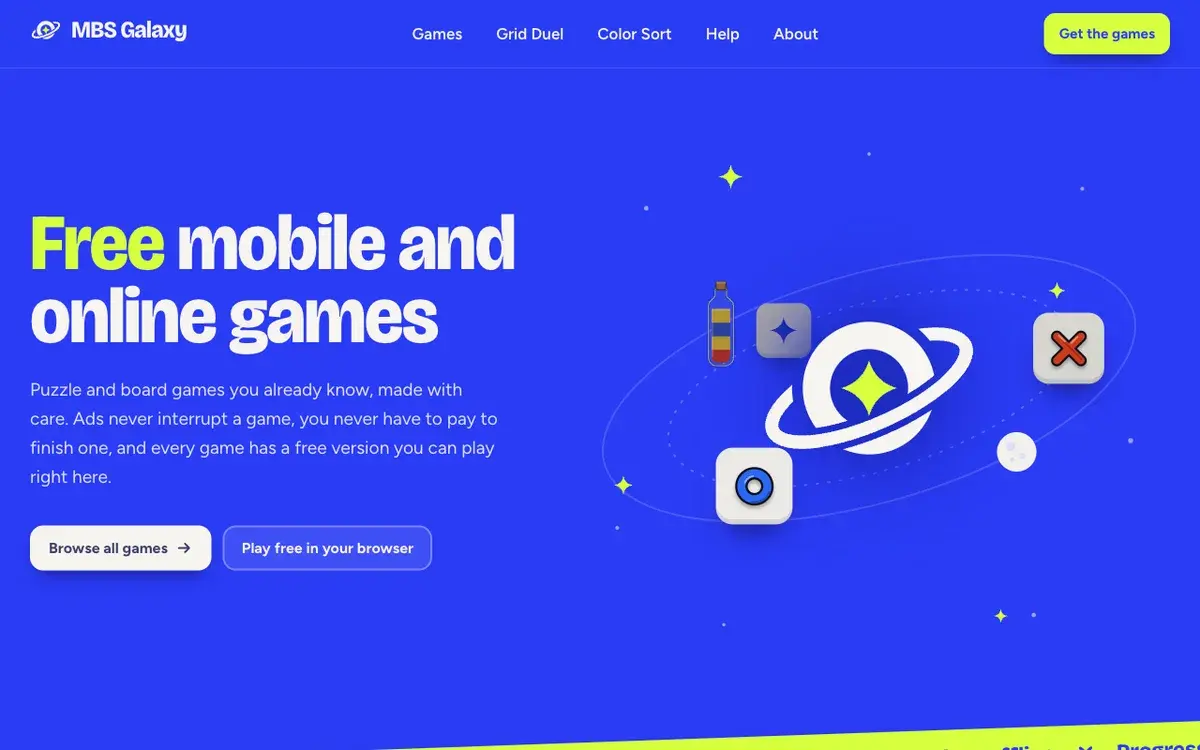
Our games brand: free puzzle and board games to play in the browser, with guides for each one.
- Web
- Live
Grid Duel
Game
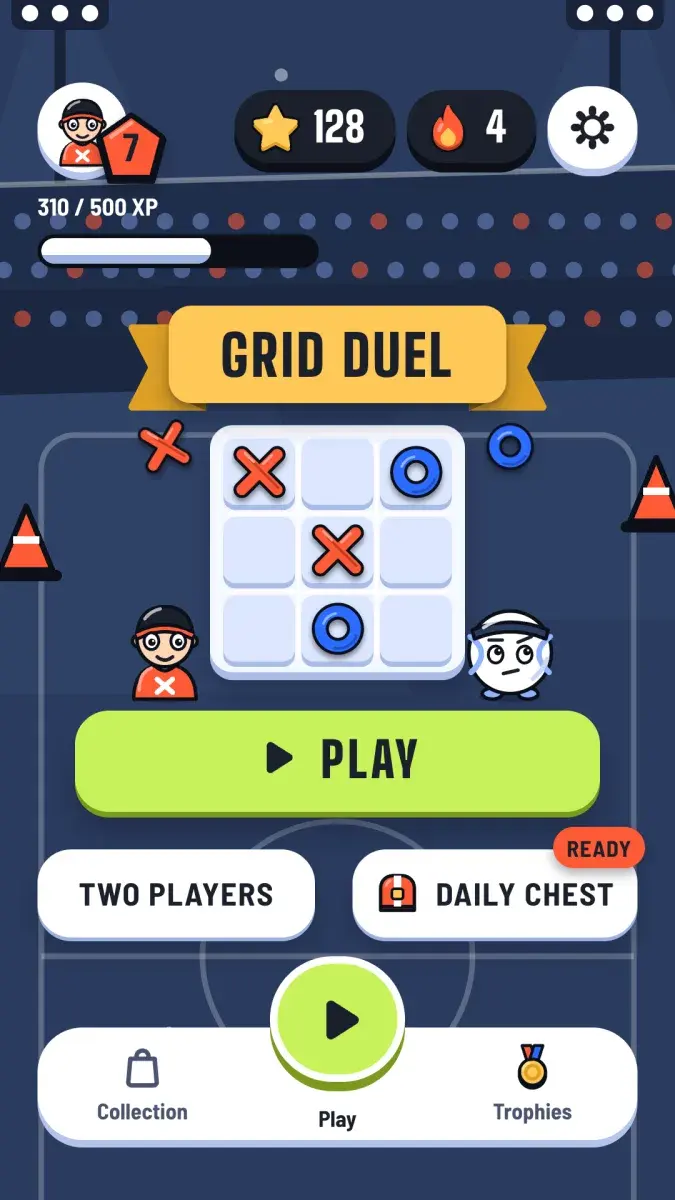
Tic tac toe against rivals with their own styles, on Google Play and in the browser at tictactoeduel.com.
- Android
- Web
- Live
Color Sort
Game
A calm water sort puzzle on Google Play in which every level is proven solvable without boosters.
- Android
- Web
- Live
Tigu Run
Game
A one-tap runner for young children on Google Play: thirty levels, offline play, no account and child-directed ads.
- Android





Tooling we publish.
monetization-kmp repository (opens in a new tab)
Our Kotlin Multiplatform ads and billing library, with rewarded ads, daily rewards, streaks and unlocks.
What we decline to build.
We do not build games designed around aggressive monetisation of vulnerable players, including loot mechanics aimed at children or models that depend on a few people spending more than they can afford. We hold that position whatever it costs us.
Questions on games.
Questions about the company, payments and your data are answered on the FAQ page.
All questionsWhich engine do you use?
It is chosen per game, against its platforms and art direction. Grid Duel is built in Godot, Color Sort in Unity, and Tigu Run shares Kotlin code with our apps.
Can I play without installing anything?
Yes. Every game on mbsgalaxy.com has a version that plays in the browser, with no sign-up.
Do you build games for children?
Yes, playable without accounts or sign-in and within the stores’ families policies.
Are your games pay-to-win?
No. Rewards are earned by choice and progress never depends on paying.
Do you add events after launch?
Yes. Remote configuration is built in from the start, so events and tuning need no new release.
Other disciplines.
Mobile apps
Our Android and iOS apps, native or on one shared codebase where the product justifies it.
Web platforms
Our web apps, dashboards and product sites, built to perform on a mid-range phone.
Desktop software
Windows, macOS and Linux builds of our products, for work that does not belong in a browser.
Applied AI
AI in our products: video generation, on-device speech and language models, and the tests that decide what ships.
Design & planning
How an idea becomes a product: definition, flows, design systems and a plan we hold ourselves to.
Questions about our games?
Write to us about any of our products, a press or partnership enquiry, or working here. A person replies.